What Is the Best Water Treatment Equipment in China? The honest answer depends on water quality, capacity, energy limits, and the intended use. No single machine fits every factory, hotel, municipal plant, or rural community. That assumption is incomplete. A clear selection begins with laboratory testing, not a polished product brochure.
Global evidence shows why this decision matters. The WHO and UNICEF Joint Monitoring Programme reported that 2.2 billion people lacked safely managed drinking water in 2022. The United Nations World Water Development Report 2024 also highlights rising pressure from urban growth, industry, climate variability, and pollution. China faces uneven water availability across regions. Its Ministry of Water Resources publishes annual data showing substantial differences in water demand and supply conditions. Therefore, reliable Water Treatment Equipment must match local risks and operating realities.
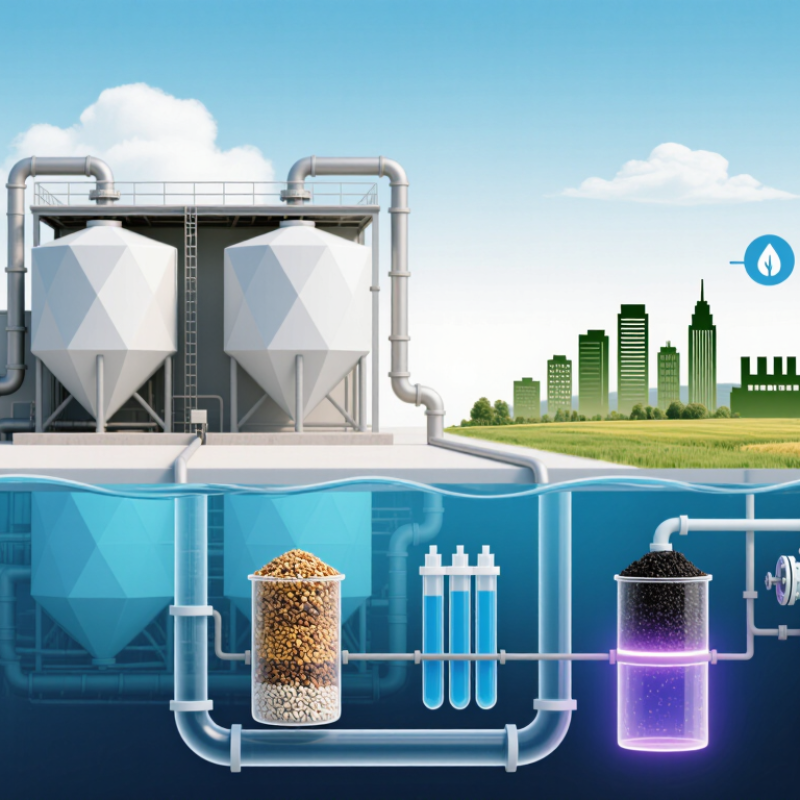
For drinking water, multimedia filtration, ultrafiltration, activated carbon, and ultraviolet disinfection may form a practical treatment train. Reverse osmosis can reduce dissolved salts, but it produces concentrate and requires careful pretreatment. For industrial wastewater, membrane bioreactors, dissolved air flotation, advanced oxidation, or chemical treatment may be more suitable. Each option has trade-offs. Energy use matters. So does maintenance.
China’s GB 5749-2022 drinking water standard provides an essential compliance reference. However, meeting a standard is not the same as delivering stable performance. Operators should examine verified test results, component traceability, automation controls, after-sales service, and lifecycle costs. Small details matter, such as membrane fouling after a dusty summer or sensor drift during a night shift. The best system is not always the most advanced. It is the one that performs consistently, can be maintained locally, and protects users over time.
China’s water-treatment equipment market is shaped by scale, uneven demand, and strict discharge rules. The China Urban Construction Statistical Yearbook 2022 recorded about 216 million cubic meters per day of urban wastewater-treatment capacity. The reported urban treatment rate exceeded 98%. Yet capacity is not the whole story.
Rural systems still need compact, low-maintenance equipment. Industrial parks demand stronger pretreatment, membrane separation, sludge dewatering, and online monitoring. The 2023 China Water Resources Bulletin reported national water use of approximately 590.7 billion cubic meters. Industrial users consumed about 97.7 billion cubic meters. These figures indicate continuing demand for water reuse and process-water recovery, especially in water-stressed regions.
Standards decide whether equipment performs beyond a sales brochure. Urban wastewater projects commonly reference GB 18918-2002, while drainage design follows GB 50014-2021. Reclaimed-water applications may also involve GB/T 18920-2020. Equipment selection should examine influent variability, electricity use, maintenance access, and sludge disposal. Small details matter. A treatment line can meet its design load yet fail during seasonal peaks. That weakness is often underestimated. Buyers should verify pilot data, third-party testing, calibration records, and compliance documentation before judging the “best” system.

Reverse osmosis remains one of China’s most capable water treatment technologies. Its performance is measurable, not merely promotional. AWWA Manual M46 states that well-designed RO systems commonly achieve 95–99% salt rejection. This sharply reduces dissolved salts, hardness, and many inorganic contaminants.
Recovery tells a different story. Many industrial RO systems operate between 50% and 85% recovery, depending on feedwater quality, pressure, and pretreatment. Higher recovery produces less concentrate, but it can increase scaling risks.
The U.S. EPA Water Treatability Database identifies membrane fouling, concentration polarization, and chemical precipitation as critical operating concerns. A clean membrane cannot stay clean without disciplined pretreatment.
Daily plant experience exposes an uncomfortable gap. Real systems rarely match brochure numbers. A system may reach 98% rejection during commissioning, then fall below that level after poor cartridge maintenance. Turbidity, iron, silica, and biological growth can quietly reduce output.
Operators should track conductivity, pressure loss, permeate flow, and recovery every shift. A small conductivity increase may signal membrane damage before water quality becomes visibly different. The 2022 WHO Guidelines for Drinking-water Quality also emphasize risk-based monitoring rather than relying on one laboratory result.
Performance is conditional. Good equipment still needs good decisions.
What Is the Best Water Treatment Equipment in China?
Ultrafiltration is a strong choice when water contains suspended solids, colloids, bacteria, and fine particles. Its membrane pores usually measure 0.01–0.1 μm. Depending on feedwater quality and operating conditions, turbidity removal can reach 90–99.99%. Clear water can leave the module while many contaminants remain concentrated on the other side.
In field applications, the best equipment is not always the largest system. It should match flow rate, raw-water temperature, pressure, and daily demand. A practical installation needs pretreatment, pressure gauges, automatic flushing, and a reliable cleaning plan. I have seen systems lose performance because operators ignored rising pressure differences. Membranes are precise, not magical. Ultrafiltration also does not reliably remove dissolved salts, so a separate process may be necessary for high-salinity water.
Tips: Test the raw water before selection. Check turbidity at different hours, especially after rain. Keep a service record. Replace damaged seals quickly. Small leaks can affect results.
An experienced supplier should provide verified test data, pore-size information, recovery rates, and clear maintenance instructions. Ask for pilot testing when water quality changes seasonally. The 99.99% figure is possible under suitable conditions, but it should never replace site-specific verification. Performance claims need context. That detail is often overlooked.
Ultrafiltration performance range: Ultrafiltration membranes typically use pores of approximately 0.01–0.1 μm and can achieve about 90–99.99% turbidity removal, depending on feed-water quality, membrane condition, operating pressure, and pretreatment.
The displayed values represent commonly reported technical ranges rather than a guarantee for every installation.
For many industrial and municipal projects in China, membrane bioreactor systems offer strong treatment performance in limited spaces. Their mixed liquor suspended solids often operate between 8 and 12 g/L. This higher concentration supports compact biological tanks and stable removal of organic pollutants. However, high MLSS is not automatically better. Poor oxygen transfer can increase viscosity, reduce filtration stability, and raise maintenance demands.
Energy use commonly falls around 0.3–0.8 kWh/m³, depending on wastewater strength, temperature, membrane flux, and aeration control. Air scouring usually consumes the largest share. Experienced operators track dissolved oxygen, transmembrane pressure, sludge concentration, and cleaning frequency together. One reading never tells the whole story. A plant may reach 0.3 kWh/m³ during steady operation, then exceed 0.8 during cold weather or peak loading.
Practical design should begin with wastewater testing and a pilot trial, not a brochure figure. Operators should inspect membrane fouling after real production changes, including weekends and sudden discharge peaks. I have seen systems perform well on paper but struggle when sludge age becomes excessive. That weakness deserves attention. Reliable equipment also needs accessible sampling points, clear alarm records, and trained local staff. Conservative flux selection may reduce short-term capacity, yet it can protect long-term stability and lower unexpected cleaning costs.
The best equipment depends on wastewater strength, flow variation, and the discharge route. In China, GB 18918-2002 Class 1-A limits commonly guide municipal wastewater design. They include COD at 50 mg/L, BOD5 at 10 mg/L, suspended solids at 10 mg/L, and total phosphorus at 0.5 mg/L. Total nitrogen is limited to 15 mg/L. Ammonia nitrogen is generally 5 mg/L, or 8 mg/L under the specified low-temperature condition. The pH should remain between 6 and 9.
For domestic wastewater, anoxic-aerobic biological treatment is often a practical core process. Fine screens remove plastics and hair before biological treatment. Clarifiers separate activated sludge from treated water. When nitrogen limits are strict, internal recycling and accurate oxygen control become important. For phosphorus removal, chemical dosing may support biological treatment, but dosing should follow jar tests and operating data.
Industrial wastewater needs more caution. High oil, salt, toxicity, or unstable pH can damage biological systems. Equalization tanks, oil separation, pH correction, and suitable pretreatment may be necessary. Membrane filtration can improve final clarity, but it creates concentrate and needs disciplined cleaning. Ultraviolet disinfection works well after solids removal.
Actual performance depends on sampling, temperature, maintenance, and operator skill. A common mistake is selecting equipment from one laboratory result. Seasonal testing and pilot trials provide stronger evidence. The standard remains useful, but project engineers should confirm current permits and local requirements before final selection.
Copyright ©2024 Elephant Lifting Products | All rights reserved.
38381 N Robert Wilson Rd, Gonzales, LA 70737 USA
Toll Free: (888) 844-6113 | Phone: (225) 644-6113 | Fax: (225) 644-6695
Email: sale@floralift.org