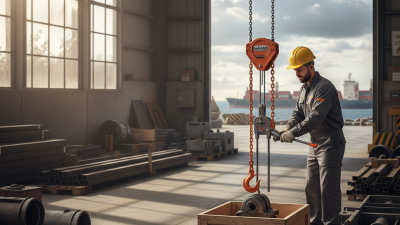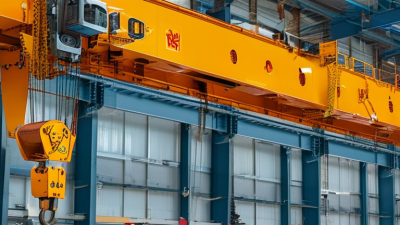
A Chain Hoist may look simple: a hand chain, load chain, gears, hooks, and a brake. Yet this compact tool can raise hundreds of kilograms with controlled human effort. Its operation depends on mechanical advantage. Pulling the hand chain turns internal gears, which move the load chain through the lifting mechanism. Each movement should feel steady, not sudden.
Ross Moloney, CEO of the Lifting Equipment Engineers Association, offers a useful safety principle: “Safe lifting begins with competent people, suitable equipment, and disciplined inspection.” That idea shapes this guide. A Chain Hoist is not merely a stronger version of a pulley. Its brake must hold the load when the operator releases the chain. Its hooks must remain aligned. Its chain must travel without twisting, jumping, or scraping against nearby surfaces.
Small details matter.
Before lifting, users should check the rated capacity, anchor point, chain condition, and hook latch. The load should hang vertically. Side pulling can damage components and create an unstable swing. Even experienced operators can overlook a worn link or a bent hook. I have to admit that simple diagrams often make lifting look easier than it is.
This article explains what a Chain Hoist is, how its gears multiply force, and how its brake controls movement. It also examines practical inspection habits and common operating mistakes. The explanation is intentionally clear, but no guide replaces training, equipment instructions, or a careful site assessment. Mechanical advantage reduces effort. It does not remove responsibility.
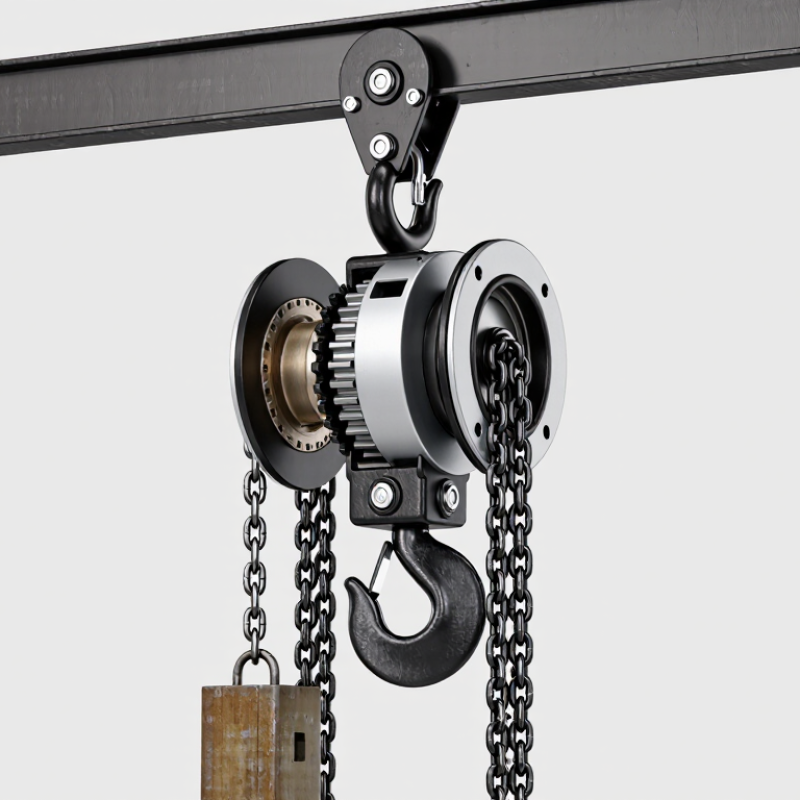
A chain hoist is a compact lifting device that raises or lowers heavy loads through a hand-operated chain. Its main parts include a load chain, hand chain, sprocket wheel, gears, brake, hooks, and housing. Pulling the hand chain turns the gears, increasing torque and moving the load chain through the lifting wheel. The mechanical advantage allows one worker to control loads far heavier than ordinary manual lifting permits.
The brake holds the load when the operator releases the chain. That detail matters. A hoist is not simply a pulley with extra steel. It must control movement under changing loads, awkward angles, and repeated use. ASME B30.16 provides inspection and operating guidance for overhead hoists, while OSHA regulations require suitable equipment, safe operation, and proper load handling in workplaces. A 2024 Grand View Research assessment valued the global material-handling equipment market at more than 200 billion U.S. dollars, showing the scale of lifting activity across industrial sites.
Capacity markings should never be treated as decoration. A 1-ton hoist may not safely lift a 1-ton load when side pulling, damaged chains, or poor anchoring are involved. The lifting point must support the full force. Inspectors check stretched links, cracked hooks, brake response, and unusual noise before use. Small defects can become serious failures. That explanation sounds simple, but it is incomplete; operator training, inspection records, and the actual lifting environment often decide whether the hoist performs safely.
A chain hoist is a lifting device that uses a hand-operated chain, gears, load chain, and a hook to raise or lower heavy loads. Pulling the hand chain turns the internal gear train, which provides mechanical advantage and moves the load chain through the lifting mechanism.
A chain hoist lifts loads through a compact system of mechanical parts. The load chain is the main lifting element. It passes around a pocketed load sprocket, which engages each chain link securely. Turning the hand chain rotates gears inside the housing. Those gears multiply input force and raise the load with controlled movement.
The brake holds the load when the operator releases the hand chain. It is a critical component, not a minor detail. The upper hook connects the hoist to a trolley, beam clamp, or lifting point. The lower hook carries the load through a swivel, latch, and hook block. Side plates, shafts, bearings, and gears keep these parts aligned.
A practical inspection should check stretched links, twisted chain, damaged hooks, worn sprocket pockets, and brake slippage. The chain should hang naturally, not scrape the housing. ASME B30.16 requires rated-capacity identification and inspection practices for overhead hoists.
The International Labour Organization reported in 2024 that nearly 3 million workers die annually from work-related causes, with hundreds of millions suffering nonfatal injuries. Hoist components deserve that level of caution.
One weakness remains common: operators may inspect visible damage but miss internal gear wear. That assumption needs challenging. A qualified person should follow the manufacturer’s instructions, applicable standards, and documented inspection intervals.
A chain hoist is a compact lifting device that uses gears, chains, and a load brake. It can raise heavy equipment without requiring electric power. The operator pulls the hand chain, which turns a chain wheel inside the hoist. This movement rotates several gears and transfers force to the load sprocket. The sprocket draws the load chain upward through the mechanism. The hook, attached to the chain, then lifts the load steadily.
The brake is critical.
It holds the load when the operator stops pulling. Without controlled braking, a suspended object could drop unexpectedly. To lower the load, the operator pulls the hand chain in the opposite direction. The internal brake releases gradually, allowing the load chain to travel downward. The speed depends on the operator’s control, not simply on gravity. Small adjustments matter.
It looks simple. It is not risk-free.
In practical use, the hoist must hang directly above the load. Side pulling can bend components or make the load swing. Before lifting, an experienced worker checks the chain, hook latch, brake, and rated capacity. Rust, twisted links, or unusual resistance require the hoist to be removed from service. The rated capacity is not a suggestion. It is a working limit. Even with careful handling, real conditions can be less predictable than training examples, especially when loads have uneven weight or sharp edges.
A chain hoist lifts heavy loads through a chain, sprockets, and a geared lifting mechanism. The operator pulls a hand chain, or a motor turns the load chain. Gears multiply force, allowing controlled vertical movement with less effort. A hook, latch, and load chain transfer lifting force to the object. The system works simply, but simple does not mean risk-free.
Several types suit different work areas.
Manual chain hoists are portable and practical where power is unavailable.
Lever hoists use a short operating lever for pulling, lifting, or positioning tasks.
Electric chain hoists provide faster, repeatable lifting in workshops and production areas.
Pneumatic chain hoists use compressed air and perform well in demanding environments.
Low-headroom models fit spaces with limited ceiling clearance.
Some designs include variable-speed controls, overload protection, or corrosion-resistant components. Selection should reflect load weight, lift height, duty cycle, travel space, and available power. Choosing only by rated capacity is a common mistake.
Tips:
Inspect the chain for twisted links, stretching, rust, or damaged welds before use. Check the hook latch and test the brake without a suspended load. Keep the load balanced and directly below the hoist. Never exceed the marked working load limit.
Follow the manufacturer’s inspection schedule and ask qualified personnel to assess uncertain damage.
I would also measure headroom twice. A small error can make a suitable hoist unusable.
A chain hoist is a manually or electrically powered lifting device. It uses a hand chain, load chain, gears, and a brake. Pulling the hand chain turns the gears, which raise the load slowly and precisely. The brake holds the load when the operator stops pulling. Its simplicity can be misleading. Small errors still create serious consequences.
Safe use begins with a competent inspection. Check the rated capacity, chain links, hook throat, safety latch, brake, and mounting point. The chain must hang straight. Never side-pull, shock-load, or stand beneath a suspended load. Make a short test lift first, only a few centimetres. Watch for slipping, unusual noise, or twisting. Stop immediately if anything feels wrong. Isolate defective equipment and report it.
The ASME B30.16 standard provides inspection and operating guidance for below-the-hook lifting devices. In the United Kingdom, HSE guidance under LOLER generally requires thorough examination every 12 months, or every six months for equipment lifting people or lifting accessories. The International Labour Organization reported 2.93 million work-related deaths globally in 2023. That figure includes many hazards, not only hoists, but it shows why routine controls matter. In practice, operators sometimes rush a familiar lift. That is the part worth questioning. A clear lifting plan, trained workers, visible exclusion zones, and accurate load weight reduce avoidable risk.
| Data Dimension | What It Means | How It Works or Applies | Typical Fact or Data Point | Safe-Use Requirement |
|---|---|---|---|---|
| Basic Definition | A chain hoist is a manually or mechanically powered lifting device used to raise, lower, and position suspended loads. | Pulling or powering the hand chain rotates gears that drive a load chain through a lifting mechanism. | Commonly used for vertical lifting | Use only for loads within the hoist’s marked rated capacity. |
| Main Components | Typical parts include the load chain, hand chain, gears, chain wheel, load sheave, hooks, brake, side plates, and housing. | Each component transfers force, supports the load, controls movement, or prevents unintended descent. | The brake holds the load when lifting input stops | Do not operate a hoist with missing, bent, cracked, or heavily worn parts. |
| Mechanical Advantage | Gears reduce the manual effort needed to lift a heavy load. | The operator pulls a longer length of hand chain while the load chain moves a shorter distance. | More lifting force requires more hand-chain travel | Do not add cheater bars, extension handles, or other devices to increase force. |
| Rated Capacity | The maximum load the hoist is designed to lift under specified conditions. | The capacity is determined by the hoist design, chain strength, hooks, gears, brake, and supporting structure. | Capacity is specified on the identification plate or label | Never exceed the lowest rated capacity of the hoist, sling, hook, anchor, or support. |
| Lifting Direction | Chain hoists are primarily designed for straight vertical lifting. | The load chain should enter and leave the hoist without side loading or severe angular pull. | Vertical alignment is the normal operating position | Keep the hoist directly above the load to prevent swinging and side loading. |
| Load Chain | A calibrated alloy-steel chain designed to carry the rated load. | The chain passes over the load sheave and transmits lifting force to the lower hook. | The chain must match the hoist and must not be substituted with ordinary chain | Inspect for stretched links, cracks, corrosion, gouges, twists, and damaged welds. |
| Hooks and Latches | Hooks connect the hoist to the support and to the load-handling accessory. | A safety latch helps retain the connection when the hook is properly loaded. | The load should sit in the hook bowl, not on the tip | Never load the hook tip, latch, back, or side unless specifically designed for that use. |
| Braking System | The brake controls or holds the suspended load when lifting force is released. | In many manual hoists, a friction brake engages automatically when the operator stops pulling. | The brake must hold the load without drifting | Test the brake with the load just clear of the ground before continuing the lift. |
| Common Applications | Suitable for workshops, maintenance tasks, machinery positioning, construction support, and equipment installation. | It can lift a load where a suitable overhead beam, trolley, gantry, or anchorage is available. | Useful where controlled, intermittent lifting is required | Confirm that the supporting structure is engineered and rated for the combined load and forces. |
| Pre-Use Inspection | A visual and functional check completed before operation. | The operator examines the body, hooks, chain, brake, labels, fasteners, and operating mechanism. | Inspection should occur before each shift or use | Remove the hoist from service if defects, abnormal noise, binding, or brake slip are found. |
| Load Attachment | The method used to connect the load to the lower hook. | Slings, shackles, lifting eyes, or other compatible accessories transfer the load to the hook. | The load must be balanced and securely attached | Use approved lifting accessories and protect slings from sharp edges. |
| Controlled Lifting | A slow, steady movement without shock loading. | The operator gradually applies force and keeps the load stable throughout the lift. | A short trial lift helps confirm balance and brake function | Lift a few inches first, stop, check stability, then continue only if conditions are safe. |
| Swing and Side Pulling | Horizontal or angled force applied to a hoist intended for vertical lifting. | Side loading can bend hooks, damage the chain, overload components, and destabilize the support. | Side pulling is generally prohibited unless specifically approved by the design | Use a suitable winch, trolley, or positioning system for horizontal movement. |
| Personnel Safety Zone | The area beneath and around a suspended load. | A failed attachment, chain, hook, or support can cause the load to fall or swing. | A suspended load is a serious crush and struck-by hazard | Keep people clear of the load path and never lift or transport loads over people. |
| Environmental Conditions | External factors such as rain, dust, chemicals, heat, cold, and explosive atmospheres. | These conditions can reduce material strength, damage lubrication, impair braking, or create ignition risks. | Operating limits vary by hoist design and manufacturer instructions | Use only equipment approved for the specific environment and protect it from contamination. |
| Maintenance | Routine cleaning, lubrication, adjustment, inspection, and repair. | Maintenance preserves chain flexibility, gear operation, brake performance, and hook condition. | Follow the designated inspection and maintenance schedule | Repairs and part replacement should be performed by qualified personnel using correct parts. |
| Storage | The method used to protect the hoist when it is not in service. | Keeping the hoist clean, dry, and protected helps prevent corrosion and contamination. | Dry, covered storage is preferred | Do not leave the load suspended during storage or unattended operation. |
| Operator Competence | The knowledge and practical ability required to operate the hoist safely. | Training should cover capacity, inspection, rigging, signals, hazards, controls, and emergency actions. | Only trained and authorized personnel should operate the equipment | Stop work when the load, equipment, environment, or instructions are uncertain. |
Copyright ©2024 Elephant Lifting Products | All rights reserved.
38381 N Robert Wilson Rd, Gonzales, LA 70737 USA
Toll Free: (888) 844-6113 | Phone: (225) 644-6113 | Fax: (225) 644-6695
Email: sale@floralift.org