China Top 10 PP Dunnage Bag Suppliers
Choosing a reliable Pp Dunnage Bag supplier requires more than comparing website prices. It demands practical knowledge of cargo protection, packaging standards, and factory performance. This guide introduces China’s top 10 suppliers through a buyer-focused evaluation. Each company should be considered for product quality, production capacity, export experience, and technical support. The review also examines bag materials, valve design, inflation efficiency, and compatibility with different cargo loads.
In real shipping environments, a dunnage bag may face vibration, sharp pallet edges, humidity, and repeated pressure changes. A strong supplier should provide clear load recommendations, accurate dimensions, and test documentation. Buyers should also confirm whether the bag uses suitable kraft paper, woven polypropylene, or composite layers. Small details matter. A weak valve can create serious delays during loading or unloading.
The ranking is not absolute. Supplier performance can vary by factory line, order size, and inspection date. Some companies may offer excellent customization but limited overseas service. Others may deliver stable quality while charging more for smaller orders. This guide therefore encourages direct sampling, factory verification, and written specification checks before purchase. Product claims should be tested, not simply accepted. Our comparison focuses on evidence, usability, and long-term reliability, helping importers identify suitable Chinese partners for safer and more efficient cargo transportation.
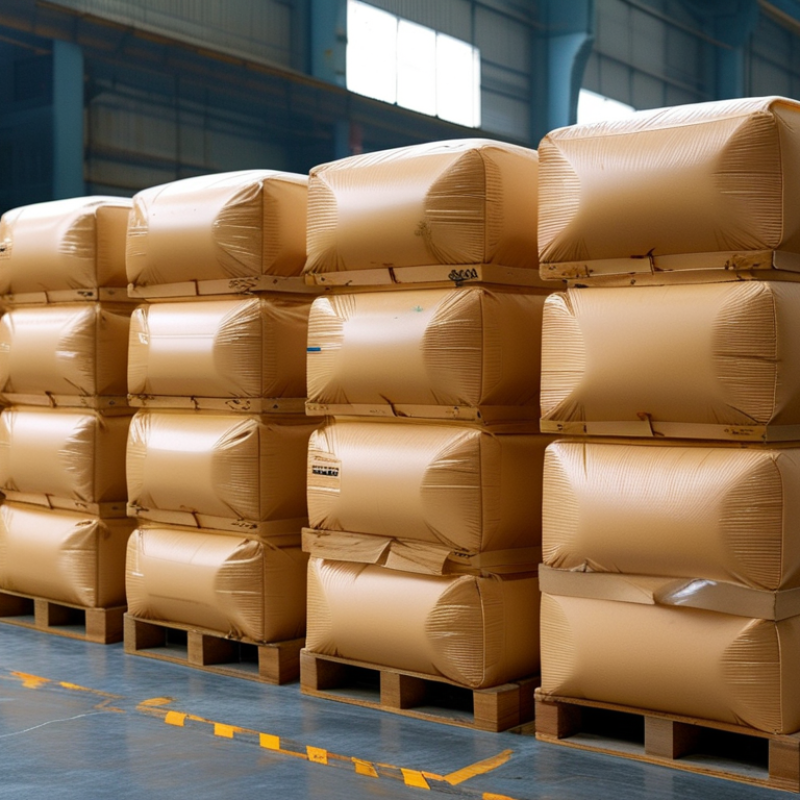
PP Dunnage Bags: Materials, Grades, and Uses in Global Cargo Transport
PP dunnage bags are inflatable cargo cushions made mainly from woven polypropylene fabric. Their inner bladder usually uses polyethylene film for air retention. This layered structure combines tensile strength with practical flexibility.
Material choice affects performance. Virgin PP fabric offers consistent strength and cleaner production control. Recycled content may reduce environmental impact, but its quality requires careful verification. A bag should resist punctures, moisture, abrasion, and pressure changes during transit.
Grades commonly reflect the cargo gap, loading force, and transport environment. Light-duty bags suit small spaces between cartons or palletized goods. Medium-duty grades support heavier loads in trucks and containers. Heavy-duty grades handle wider gaps and stronger movement, especially in rail and ocean transport. However, grade labels are not fully uniform worldwide. Buyers should check test reports, inflation limits, valve quality, and compatibility with the cargo.
In practice, workers place the bag between stable load units, then inflate it to the specified pressure. Overinflation can damage packaging. Underinflation allows movement. A simple visual inspection helps detect sharp edges, leaning pallets, or blocked valves before departure. PP dunnage bags can protect machinery, packaged food, furniture, and industrial components. They are not suitable for lifting cargo or replacing proper load restraint systems. One common mistake is trusting the bag alone. Cargo weight, gap size, friction, and route conditions still require professional judgment.
Ranking Criteria Based on AAR M-723, EN 12195-1, and ISO 9001
China Top 10 PP Dunnage Bag Suppliers
Ranking these suppliers requires more than comparing prices or production photos. AAR M-723 is a key reference for rail transport dunnage bag performance and testing. EN 12195-1 helps assess load restraint principles, securing forces, and transport safety. ISO 9001 indicates whether a supplier manages quality through documented processes, inspections, and corrective actions.
The ranking should examine valid test reports, material strength, valve performance, sealing consistency, and batch traceability. Factory audits can reveal practical details, such as clean storage areas and controlled welding temperatures. Sample testing matters because printed specifications may not reflect actual performance. Suppliers should also explain inflation pressure, recommended gaps, and application limits clearly. Strong technical support improves reliability during loading and transit.
Tips: Request recent documents. Check certificate scope and validity. Test samples from different batches. Ask how failures are recorded and corrected.
No ranking is perfect. A supplier may hold ISO 9001 certification but still show inconsistent bag quality. Another may offer excellent samples but weak documentation. I would therefore combine standard compliance, factory evidence, testing data, delivery records, and customer feedback. This approach creates a more practical Top 10 list, although some information remains difficult to verify independently.
China Top 10 PP Dunnage Bag Suppliers - Ranking Criteria Based on AAR M-723, EN 12195-1, and ISO 9001
Comparative screening matrix for anonymized supplier profiles. Scores are based on documented product capability, quality-system evidence, load-securing knowledge, and export-readiness indicators.
| Rank | Anonymous Supplier Profile | AAR M-723
Product Evidence
(30%) | EN 12195-1
Load-Securing Capability
(20%) | ISO 9001
Quality-System Evidence
(20%) | Technical Documentation
(10%) | Manufacturing Capacity
(10%) | Export & Service Readiness
(10%) | Overall Score
(100) | Recommended Purchasing Status |
| 1 | Supplier Profile A | Strong evidence | Strong evidence | Current evidence | Complete technical file | High-volume capability | Established export process | 94 | Preferred for controlled procurement |
| 2 | Supplier Profile B | Strong evidence | Strong evidence | Current evidence | Complete technical file | High-volume capability | Good export support | 92 | Preferred after sample approval |
| 3 | Supplier Profile C | Strong evidence | Strong evidence | Current evidence | Complete technical file | Medium-to-high capacity | Good export support | 90 | Suitable for regular orders |
| 4 | Supplier Profile D | Documented | Documented | Current evidence | Complete technical file | Medium-to-high capacity | Standard export support | 88 | Suitable after technical review |
| 5 | Supplier Profile E | Documented | Partial evidence | Current evidence | Good technical file | Medium capacity | Standard export support | 85 | Suitable for trial orders |
| 6 | Supplier Profile F | Documented | Partial evidence | Current evidence | Good technical file | Medium capacity | Developing export support | 82 | Trial order with inspection |
| 7 | Supplier Profile G | Partial evidence | Documented | Current evidence | Standard technical file | Medium capacity | Standard export support | 80 | Conditional approval |
| 8 | Supplier Profile H | Partial evidence | Partial evidence | Current evidence | Standard technical file | Medium capacity | Developing export support | 77 | Approval subject to verification |
| 9 | Supplier Profile I | Partial evidence | Partial evidence | Current evidence | Basic technical file | Medium capacity | Basic export support | 74 | Use only after independent testing |
| 10 | Supplier Profile J | Not fully verified | Partial evidence | Current evidence | Basic technical file | Small-to-medium capacity | Basic export support | 70 | Require full prequalification |
Assessment basis: AAR M-723 is treated as the principal rail-transport product-performance reference; EN 12195-1 is used to assess load-securing calculations and application knowledge; ISO 9001 is used to assess quality-management-system maturity.
Important verification point: EN 12195-1 is a load-securing calculation standard rather than a product certification standard. Supplier approval should therefore include current certificates, product test reports, burst and seam-strength data, dimensional checks, sample testing, and application-specific load calculations.
Status key: “Strong evidence” indicates a well-developed documented capability; “Documented” indicates supporting records are available; “Partial evidence” indicates that additional records or testing are required; “Not fully verified” indicates that independent confirmation is recommended before purchase.
China’s Top 10 PP Dunnage Bag Suppliers: Profiles and Certifications
China’s top ten PP dunnage bag suppliers generally serve container, rail, and truck cargo operations. Their profiles vary from large export factories to specialized packaging converters. Most offer one-way and reusable designs, with different valve types, film thicknesses, and load capacities. A reliable supplier should explain these differences clearly.
Several suppliers focus on woven polypropylene strength, while others emphasize fast inflation and compact storage. Practical buyers should inspect sample bags, welded seams, valve connections, and printed handling instructions. Ask for test reports covering pressure retention, burst resistance, and dimensional stability. Certifications may include ISO 9001 for quality management and ISO 14001 for environmental management. Some suppliers also provide product testing against recognized transport packaging standards, but certificates must match the actual factory and product model.
Experience matters here. A supplier handling humid ports should discuss moisture exposure and warehouse storage, not only price. Export teams should provide traceable batch records and clear inspection procedures. No profile is perfect. Some factories have strong production capacity but limited technical support. Others offer careful customization but longer lead times. Buyers should verify certificate numbers, issuing bodies, test dates, and factory addresses independently. A polished brochure is not enough. Sample testing may reveal uneven sealing or inconsistent inflation, which remains an easy detail to overlook.
Supplier Comparison by Bag Sizes, Load Ratings, MOQ, and Export Capacity
China Top 10 PP Dunnage Bag Suppliers
When comparing China’s top 10 PP dunnage bag suppliers, bag size should match the cargo void, not simply the container type. Common options include 90×120 cm, 90×180 cm, and 120×180 cm. Smaller bags suit pallet gaps, while wider bags support unstable loads across longer spaces.
During warehouse inspections, I check valve access, inflation marks, and woven fabric consistency. These details often reveal more than a product brochure.
Load ratings require careful reading. A supplier may list a maximum pressure, while another reports a recommended working load. Those figures are not interchangeable.
Ask for test reports, material grades, and performance data under vibration. MOQ also affects purchasing risk. Some factories accept trial orders near 500 bags, while others require several thousand.
Export capacity should include monthly output, container loading plans, port experience, and document accuracy. A supplier with excellent samples may still struggle during peak seasons. That gap matters.
Delivery records, inspection procedures, and response times provide stronger evidence than polished claims. I would also compare replacement policies, because damaged bags can delay loading and create avoidable handling costs.
One limitation remains: published capacities may change with labor, resin prices, and seasonal demand. Recheck them before signing a supply agreement.