
Language:

China Top Jacquard Driving Board Manufacturers

China has become a significant manufacturing base for textile control components, including the Jacquard Driving Board. Its supplier network covers electronic design, PCB assembly, firmware development, and loom integration. This combination supports both standard replacement boards and customized solutions for high-speed weaving systems.

The ITMF International Textile Machinery Shipment Statistics 2023 report identifies China as one of the world’s leading textile machinery markets. However, the report does not separate Jacquard electronics from complete machinery. That limitation matters. A large machinery shipment figure cannot prove a manufacturer’s board quality. Buyers should examine factory audits, circuit protection, firmware stability, and documented testing procedures.

Reliable manufacturers usually provide clear voltage ranges, connector drawings, response-time data, and compatibility lists. Some also demonstrate continuous operation beside an active loom, where heat, vibration, and lint create real pressure. TÜV, IEC-related testing, and ISO 9001 certification can strengthen supplier credibility, but certificates alone are not enough. Practical production records matter more.

This guide examines China’s top Jacquard Driving Board manufacturers through technical capability, product consistency, customization support, and after-sales service. It also considers evidence from industry reports, supplier documentation, and application experience. The ranking should not be treated as absolute. Product quality can change between batches, and public information is sometimes incomplete. A careful buyer still needs samples, traceability documents, and independent verification before placing a large order.
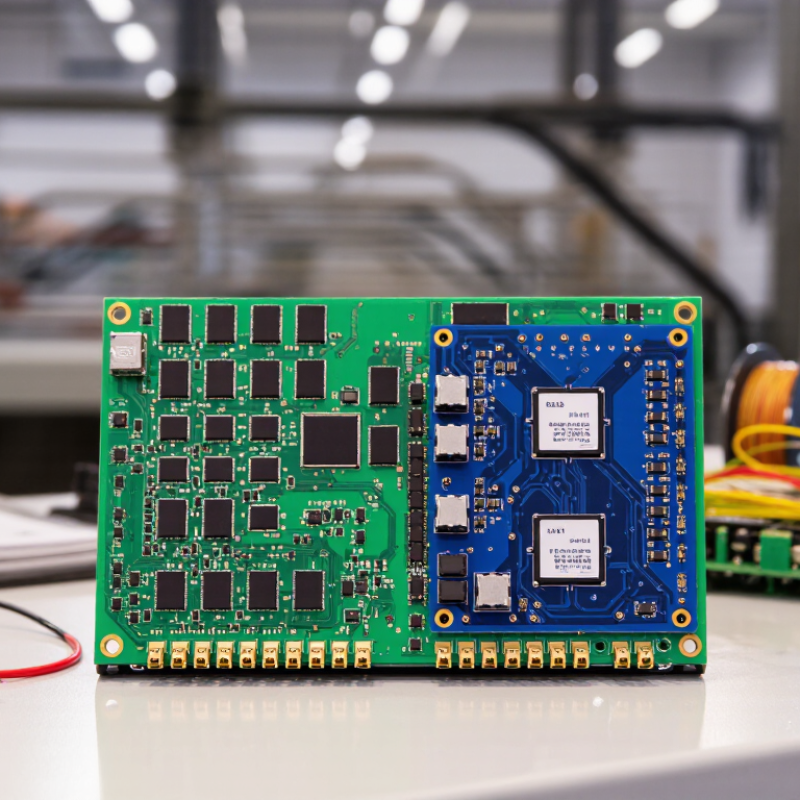
China Top Jacquard Driving Board Manufacturers

Jacquard Driving Boards: Definition, Role, and Core Functions

China Top Jacquard Driving Board Manufacturers

Jacquard Driving Boards: Definition, Role, and Core Functions

A jacquard driving board is the electronic control unit behind selective yarn movement. It receives pattern data, processes timing signals, and activates solenoids or piezoelectric elements. In simple terms, it turns a digital design into controlled mechanical action. During production, the board must remain accurate beside vibration, lint, heat, and electrical noise.

Its core functions include signal distribution, actuator switching, synchronization, overload protection, and fault feedback. A reliable board keeps every needle or hook aligned with the loom cycle. Small timing errors can create broken patterns, skipped motifs, or fabric waste. Grand View Research valued the global textile machinery market at approximately USD 26 billion in 2023, showing strong demand for dependable electronic control systems. ITMF’s International Textile Machinery Shipment Statistics also continues to track significant investment in shuttleless weaving equipment, where electronic jacquard control is essential. These reports do not measure driving boards alone. That limitation deserves attention.

Tips: Check operating voltage, channel count, connector design, heat resistance, and communication protocol before purchasing. Request waveform tests and a loaded trial, not only a factory inspection. A board may pass a bench test and still fail under lint and continuous vibration. Maintenance teams should record alarm codes, temperature, and replacement intervals. That evidence supports better sourcing decisions.


China’s Jacquard Driving Board Manufacturing Landscape

China’s Jacquard driving board manufacturing landscape is closely tied to its dense textile machinery supply chain. The International Textile Machinery Federation’s 2023 shipment statistics placed China among the largest destinations for new shuttleless looms, receiving more than half of global deliveries. This installed base creates steady demand for replacement boards, controller upgrades, and compatible spare modules.

Manufacturers typically cluster near weaving equipment, PCB assembly, connector, and precision moulding suppliers. Their boards often support 16, 32, or 64-channel solenoid control, with attention to pulse accuracy, heat dissipation, and electromagnetic compatibility. The China Textile Machinery Association has repeatedly identified intelligent control and equipment integration as major development directions. However, board quality is not defined by channel count alone. A unit may pass a factory test, yet fail after lint enters a poorly sealed cabinet. Small details matter.

Field experience also exposes uneven reliability. Some suppliers provide strong circuit design but weak documentation or slow fault analysis. Others offer fast customization, though their testing records remain incomplete. Buyers should request endurance data, voltage fluctuation tests, connector cycle results, and traceable batch records. Research from the International Trade Centre also shows China’s broad export reach in machinery and electrical components, but export scale does not automatically prove stable after-sales service. That distinction is easy to miss.

Leading Chinese Manufacturers and Their Product Capabilities

China’s leading jacquard driving board manufacturers serve textile mills, loom builders, and equipment integrators worldwide. Their product capabilities commonly include multi-channel actuator control, stable pulse output, signal isolation, and compatibility with different jacquard systems. Experienced manufacturers also develop boards for specific needle counts, operating voltages, and installation spaces.

Production quality depends on more than circuit design. Skilled teams inspect incoming components, control soldering temperatures, and test each board under repeated switching cycles. They may use thermal testing, vibration checks, and communication diagnostics before shipment. Clear wiring labels and replaceable connectors can reduce maintenance time on a busy factory floor. That matters.

Many Chinese suppliers combine engineering, prototype assembly, and volume production in one facility. This shortens communication when customers request revised layouts or stronger heat dissipation. Technical departments often provide wiring diagrams, sample testing, and installation guidance. Reliable suppliers also maintain production records, batch identification, and inspection reports, which support traceability during long-term use.

Still, capability claims require careful review. A board that performs well in a laboratory may struggle beside dust, vibration, or continuous heat. Buyers should confirm channel capacity, response speed, insulation protection, software communication, and after-sales support before ordering. Some manufacturers may offer impressive customization but limited documentation. That weakness deserves attention. Practical testing with the customer’s actual loom remains the most convincing measure of performance.

China Top Jacquard Driving Board Manufacturers - Leading Chinese Manufacturers and Their Product Capabilities

Capability Dimension Manufacturer Profile A Manufacturer Profile B Manufacturer Profile C Manufacturer Profile D Manufacturer Profile E
Primary Product Focus Electronic jacquard driving boards High-speed knitting machine control boards Warp knitting jacquard controllers Flat knitting jacquard control systems Customized textile motion-control boards
Typical Machine Compatibility Electronic jacquard looms and narrow-fabric machines Circular and flat knitting equipment Warp knitting and tricot machines Computerized flat knitting machines OEM-specific textile machinery
Common Needle or Hook Control Range Up to 1,000+ channels, depending on machine configuration Up to 500+ controlled outputs Several hundred to 1,000+ actuator channels Typically 100–500 selectable needles or actuators Configured according to OEM machine specifications
Control Technology Microcontroller-based digital drive control Real-time embedded control with output monitoring Distributed actuator control and synchronized timing Pattern-control integration with machine electronics Programmable control architecture for custom applications
Pattern and Data Support Binary pattern data and machine-specific files Pattern memory with external system transfer Jacquard pattern files with synchronized machine data Digital pattern input through controller or host system Custom data protocol defined by the equipment integrator
Typical Communication Interfaces RS-232, RS-485, CAN or proprietary serial links RS-485, CAN bus and digital I/O Industrial serial communication and synchronized I/O Serial communication, USB or machine-bus connection Interface selected according to OEM requirements
Input Power Configuration Commonly 12 VDC, 24 VDC or machine-provided DC supply Typically 24 VDC industrial control power 12–24 VDC, subject to actuator and machine design 24 VDC is widely used in computerized knitting systems Specified during electrical integration and validation
Actuator Drive Options Solenoid, electromagnetic or piezoelectric drive support Solenoid and electromagnetic actuator control High-frequency electromagnetic actuator control Needle-selection and actuator output control Actuator type selected for the target machine
Production Capability PCB assembly, firmware loading and functional testing Batch production with automated electrical inspection Low- and medium-volume OEM production Small-batch customization and replacement-board production Prototype development through contract manufacturing
Quality-Control Practices Incoming inspection, burn-in and channel-output testing Automated optical inspection and electrical testing Load testing, timing verification and firmware validation Pattern simulation and machine compatibility testing Customer-specific inspection plans and traceability
Best-Fit Application High-density jacquard pattern control High-speed knitting and repetitive production Warp-knitted fabrics and technical textiles Fashion knitwear and multi-pattern fabric production Machine upgrades, replacements and OEM integration
Note: The profiles summarize common capability ranges and technical configurations used by Chinese jacquard driving-board manufacturers. Exact specifications depend on the target textile machine, actuator system, firmware and electrical interface.

Key Technologies and Quality Standards for Jacquard Boards

China Top Jacquard Driving Board Manufacturers

Jacquard driving boards control needle selection, timing, and pattern accuracy. Their key technologies include stable signal processing, heat-resistant components, and accurate feedback control. During supplier audits, engineers should inspect solder joints, connector locking, and insulation clearance. A board may look clean but fail after repeated thermal cycling. That detail is often missed.

Textile Exchange’s 2024 Materials Market Report estimated global fiber production at 124 million tonnes in 2023. It projects production could reach 160 million tonnes by 2030. Higher output will increase pressure on jacquard equipment reliability and maintenance speed. Quality boards should support consistent switching, low electromagnetic interference, and traceable testing records. ISO 9001 supports controlled production processes, while IEC 60204-1 guides electrical safety for machinery. Functional tests should include continuous operation, voltage fluctuation, vibration, and temperature exposure. In practice, suppliers sometimes focus too heavily on laboratory results. Factory conditions are less forgiving. A better acceptance process combines sample testing, batch records, and field feedback. It is not perfect, but it reveals weaknesses earlier.

How to Evaluate and Select a Chinese Jacquard Board Supplier

Selecting a Chinese jacquard driving board supplier requires more than comparing quotations. The board must match your machine’s voltage, connector layout, control protocol, and installation space. Request a complete datasheet, wiring diagram, and sample before discussing large orders. A clear specification prevents expensive redesigns.

Inspect production evidence carefully. Ask for photos of solder joints, component markings, protective coating, and final testing equipment. Reliable factories should explain how they control static electricity, overheating, and signal interference. Request test records for vibration, continuous operation, and repeated power cycles. ISO certification can support credibility, but it should not replace a factory visit or video audit. Check whether serial numbers connect to production records.

Communication reveals practical experience. Can the engineer answer timing, pulse, and compatibility questions without vague promises? Ask about sample lead time, minimum order quantity, spare boards, and fault analysis. A dependable supplier should provide measurable inspection standards and a written response process. Speak with recent customers when possible. Their feedback may reveal delays that a polished presentation hides.

Low prices can look attractive. They can also conceal weaker components or limited testing. I once treated a perfect sample as proof of stable mass production, which was a mistake. Production consistency matters more than one successful board. Leave room for verification, because assumptions often fail after installation.

How to Evaluate and Select a Chinese Jacquard Driving Board Supplier

Suggested procurement priorities for comparing suppliers. The percentages represent a practical evaluation framework rather than data from any specific company or brand.

Product quality and machine compatibility should receive the highest attention because Jacquard driving boards must work reliably with the target control system, loom configuration, voltage requirements, and communication interface. Lead time, technical documentation, after-sales support, and total cost should then be assessed using comparable specifications and written quotations.

Member of

Associated Wire Rope FabricatorsMHI MemberNetPlus Alliance Member Steel Erectors Assocation STADFA member

Terms of Sale | Privacy Policy